
Categories
AdvisoryHappy 4th of July | America at 250
From our family to yours -- enjoy the fireworks, the BBQ, and everyone you love most.
Community & History | July 4, 2026
America at 250: The Ownership Mentality That Built This Country
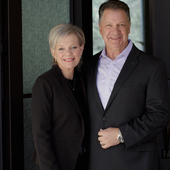
By Shannon and Jon Yoffie | Yoffie Real Estate Group, El Dorado Hills, CA | July 4, 2026
Happy Fourth. I hope you're somewhere with good food, good company, and fireworks not far off. America turns 250 today. That's not a number you let slip by.
Two minutes before we get back to the grill. There's a thread in American homeownership history worth pulling on today.
Somewhere in Kansas in 1867, a family stood on 160 acres of empty land with an $18 receipt in one hand and everything they owned in the other.
Nobody in their family had ever owned land before. In most of the world at that time, land ownership wasn't for people like them. It was for the titled, the inherited, the already-powerful. But this was America. And in America, under the Homestead Act Lincoln had signed five years earlier, this ground was theirs. Legally, completely, irrevocably theirs.
They built a house on it. Then a barn. A few years later, a well. They fought to get a school built nearby so their kids wouldn't have to ride three miles through a Kansas winter to learn to read. They showed up at every township meeting because the decisions made there affected their land -- their land -- and that changed how they felt about every decision.
That family's story is America's story.
Wondering what your El Dorado Hills home is worth on this particular anniversary? Jon Yoffie and Yoffie Real Estate Group can show you with evidence, not a guess. Request a Smart Pricing Analysis.
Freedom on Paper Is One Thing. A Deed Is Another.
The founders understood something that gets lost in the civics-class version of American history. They understood that freedom is abstract until it's attached to something real.
A declaration says you are free. A deed says this is yours. Those are different things. One is a promise. The other is a fact on the ground, recorded at the county courthouse, enforceable in court, transferable to your children.
That's why one of the very first acts of the new American government -- before the Constitution was even ratified -- was to figure out how land would work. The Land Ordinance of 1785 created the township-and-range system, a way of dividing the western territories into parcels that any citizen could purchase and own. No nobility required. No family name. You show up, you pay, you own it.
George Washington understood this at a level most people don't. Before he commanded an army or signed anything, he was a teenager with a compass and a chain, measuring wilderness in the Shenandoah Valley for $7.26 a day. By 17 he was Culpeper County's official surveyor. He spent his early career drawing property lines in Virginia mud, deciding where one man's stake ended and another's began. He eventually accumulated more than 52,000 acres through military land grants. The man who led the country to independence had built his whole early life around the work of making land ownership real. He wasn't philosophizing about property rights. He'd spent years wading through Virginia creeks measuring them.
Thomas Jefferson put the same idea into words in 1785, the same year Congress passed the Land Ordinance. Writing from Paris, where he was serving as minister to France, he called small landowners "the most virtuous and independent citizens" a republic could produce. "Those who labour in the earth," he wrote, "are the chosen people of God." He wasn't being poetic. He believed political freedom without land ownership was theoretical -- a nice idea with no address.
The bet all three were making was the same. Give ordinary people a real stake in where they live. They'll protect it. Improve it. Fight for it. They become builders.
Two hundred and fifty years later, the bet looks pretty good.
What Happens When You Give Someone a Deed
Go back to that Kansas family. Their story isn't unique. But think about who signed that deal into existence.
Lincoln's father had lost the family's Kentucky farm twice before Abraham was seven years old, both times to defective land titles. The family moved to Indiana partly because Indiana had completed its federal land survey -- cleaner titles, firmer ground under your feet. The man who signed the Homestead Act into law in 1862 had spent his childhood watching his father lose land he thought was his. He wasn't writing policy. He was settling a debt.
1.6 million families took the same deal that Kansas family took. 160 acres, an $18 filing fee, five years of building and farming to make it official. Over the following decades, roughly 10% of the entire US land area transferred from government ownership to private citizens this way.
What those families did next is what people do when they have real skin in the game. They organized townships. They petitioned for roads and rail lines. They started churches, general stores, schools, and local newspapers. They showed up to vote in numbers that would embarrass us today. They fought over local elections with the intensity of people who understood that local decisions had real consequences for their real property.
The American interior -- Kansas, Nebraska, the Dakotas, Montana, stretches of California -- didn't get built by the government. It got built by 1.6 million families who owned a piece of it and acted accordingly.
"The American interior didn't get built by the government. It got built by 1.6 million families who owned a piece of it and acted accordingly."
Coming Home From War With a Mortgage
Picture 1945. The war is over. You're 24 years old. You've spent the last three years in places you'd rather forget. You come home with a duffel bag, a uniform, and no plan beyond getting a hot meal and sleeping in a real bed.
The country hands you a mortgage.
No down payment. Below-market interest rate. Backed by the Veterans Administration. The GI Bill said: you fought for this country, so here's your piece of it.
Sixteen million veterans took that deal. By 1955, the program had backed $33 billion in home loans. The American homeownership rate went from 44% in 1940 to 62% by 1960 -- the fastest expansion of private ownership in history.
What those veterans built is something. Millions of men who had seen the worst of what the world could do came home and chose to stay. Backyard gardens. Little Leagues. School boards. Block parties. American community life in the postwar years grew out of a mortgage and a deed -- and a generation of men who decided the future was worth building.
Why Does Homeownership Build More Wealth Than Renting?
The Federal Reserve's 2022 Survey of Consumer Finances found that the median homeowner has a net worth of $396,500. The median renter has $10,400. Nearly 38 times the difference.
Here's the part that gets skipped in the holiday version of this story. Owning a home changes how you think.
Some of that gap is home equity, sure. But most of it is behavioral. Owners make longer-term financial decisions. They save differently. They invest differently. They stay longer, show up at school board meetings, and actually pay attention to what's happening on their street. Ownership builds a different relationship with the future.
Now multiply that across 85 million homeowner households. The US has built more household wealth than any other nation -- roughly $160 trillion -- and housing is the single largest asset class in that number. That didn't happen by accident. The 30-year fixed-rate mortgage is an American invention, created by the Federal Housing Administration in 1934 and almost nonexistent anywhere else in the world. Most countries offer 10 to 15-year loans with variable rates. The 30-year fixed brought monthly payments low enough that a teacher, a factory worker, a veteran fresh off a troop ship could actually buy. No other country engineered its financial system specifically to put ownership within reach of ordinary families the way this one did.
The founders knew it. Lincoln knew it. Sixteen million GI Bill mortgages proved it. A deed is a citizenship instrument.
The Golden Hills and the People Who Keep Choosing Them
El Dorado is Spanish for "The Golden One." The name predates the Gold Rush, but it stuck because in 1848 these hills were literally producing gold, and 300,000 people poured into the Sacramento region in four years to get their piece of it.
Same instinct as that Kansas family. California in 1848 was wide open. Nobody had a family claim on these hills. If you came and you worked and you stayed, you could own something. You could build something. In a world where most people were born into their station and died in it, that was a strange offer.
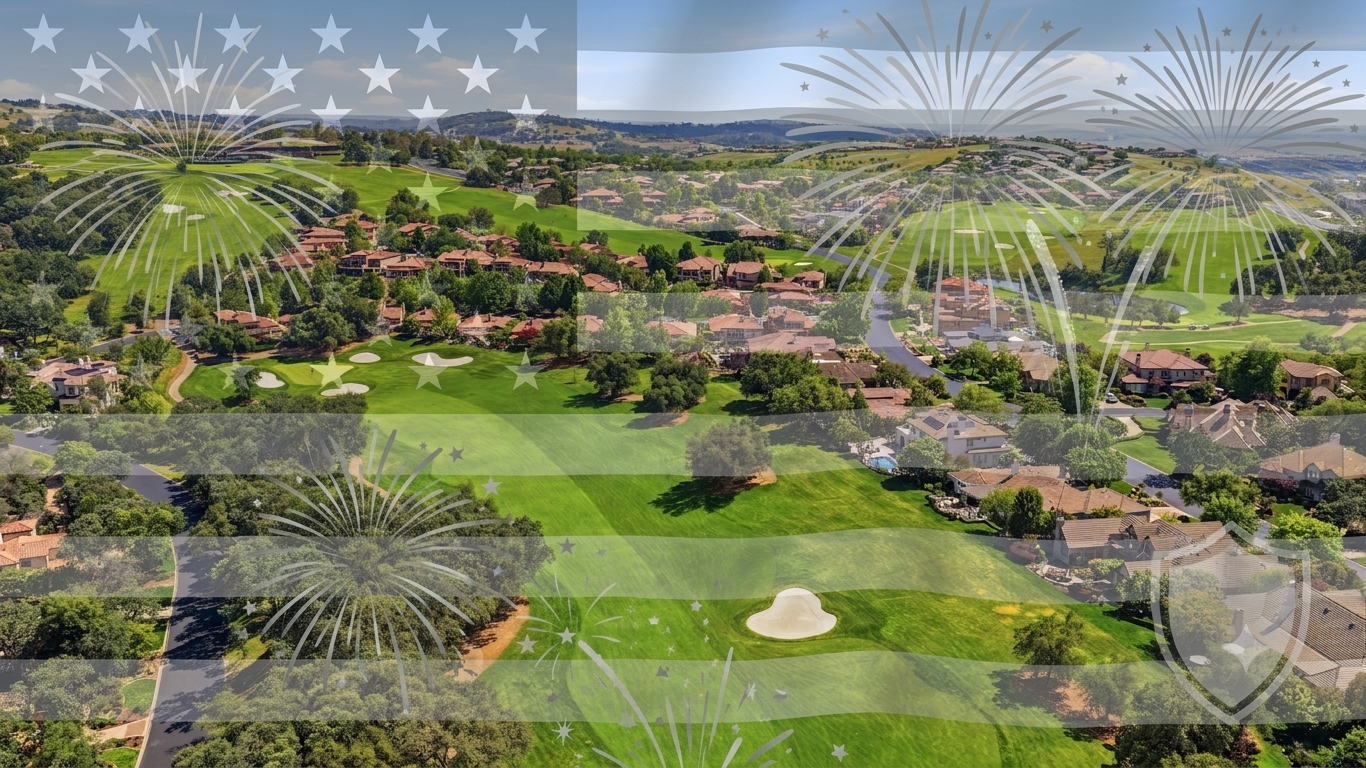
Today the hills look different. The communities here -- Serrano Country Club, Blackstone, The Promontory, Francisco Oaks -- are home to professionals and families who chose El Dorado Hills for reasons that aren't so different from those early arrivals. They wanted to own something. Build something. They found a place with good schools, neighbors who stay, and on a clear day, a view of the Sierra that makes the whole thing feel worth it.
Shannon Yoffie and Jon Yoffie, through Yoffie Real Estate Group in El Dorado Hills, have helped more than 250 families find their piece of these hills. What we see, deal by deal, year by year, is exactly that. The people who move here dig in.
The Kansas family in 1867, the veteran in 1945, the family who closed on a place in Serrano last spring -- they're all doing the same thing.
Your home is your stake in it. Worth knowing what that's worth today.
Want to see where the El Dorado Hills market stands right now? Our latest market report has the numbers. New to the area? Start with our El Dorado Hills community overview.
What's Your El Dorado Hills Home Worth Today?
Find out where your home sits in today's demand bands, backed by evidence, not an estimate.
Request a Smart Pricing AnalysisFrequently Asked Questions
What is the history of homeownership in America?
American homeownership was built through policies that transferred land and property rights to ordinary citizens over 250 years. The Land Ordinance of 1785 established the framework for private land distribution in the western territories. The Homestead Act of 1862 gave 160 acres to citizens willing to settle and farm for five years. The National Housing Act of 1934 standardized the 30-year fixed-rate mortgage, making home buying accessible beyond the wealthy. The GI Bill of 1944 provided no-down-payment home loans to returning veterans. Together, these policies moved the US homeownership rate from under 50% in 1940 to over 65% today.
How did the GI Bill change American homeownership?
The Servicemen's Readjustment Act of 1944 included a Veterans Administration home loan program with no required down payment and below-market interest rates. By 1955, the program had backed $33 billion in home loans. The American homeownership rate rose from 44% in 1940 to 62% by 1960 -- the fastest expansion of private ownership in history -- and built the communities that define American life to this day.
Why does homeownership build more wealth than renting?
The Federal Reserve's 2022 Survey of Consumer Finances found the median homeowner has a net worth of $396,500 compared to $10,400 for the median renter -- a gap of nearly 38 times. Homeownership builds wealth through equity accumulation, leverage on an appreciating asset, and the behavioral shift that comes with ownership. When you have skin in the game, you tend to make longer-term financial decisions across the board. Total US home equity now exceeds $32 trillion in private wealth.
What does El Dorado Hills have to do with California's history of land ownership?
El Dorado Hills sits in El Dorado County, named during California's Gold Rush of 1848 to 1855. The Sacramento foothills drew 300,000 people in four years -- not just for gold, but for the chance to own a piece of California before it was claimed. The communities here today, including Serrano Country Club, Blackstone, and The Promontory, carry that same tradition: people choosing these hills because they want to build something here, not just live here.
Is homeownership still a good investment in El Dorado Hills in 2026?
El Dorado Hills has been one of the Sacramento region's most consistently in-demand markets, supported by top-rated schools in the El Dorado Union High School District, access to Lake Tahoe and the Sierra Nevada, and proximity to both Sacramento and Bay Area employment. Yoffie Real Estate Group advises buyers and sellers using demand band analysis and local buyer behavior data for each price range in El Dorado Hills and surrounding communities.
How do I find out what my El Dorado Hills home is worth?
Jon Yoffie and Shannon Yoffie at Yoffie Real Estate Group provide Smart Pricing Analyses using demand band analysis and buyer behavior data specific to El Dorado Hills, Serrano, Blackstone, Cameron Park, and Folsom. We identify the price range where buyer activity concentrates for your specific home, giving you a true market range rather than an automated estimate. You can request a pricing analysis at yoffierealestategroup.com/smart-pricing-analysis.
Sources: Federal Reserve Survey of Consumer Finances (2022); U.S. Census Bureau Historical Homeownership Rate Data; Library of Congress, Homestead Act (1862); U.S. Department of Veterans Affairs, GI Bill History; National Archives, Land Ordinance of 1785. Data on US home equity from Federal Reserve Flow of Funds (2025 estimate).
