
Categories
AdvisoryPublished February 22, 2026
The $25K Mistake: What Happens When You Price Above Your Demand Band in El Dorado Hills

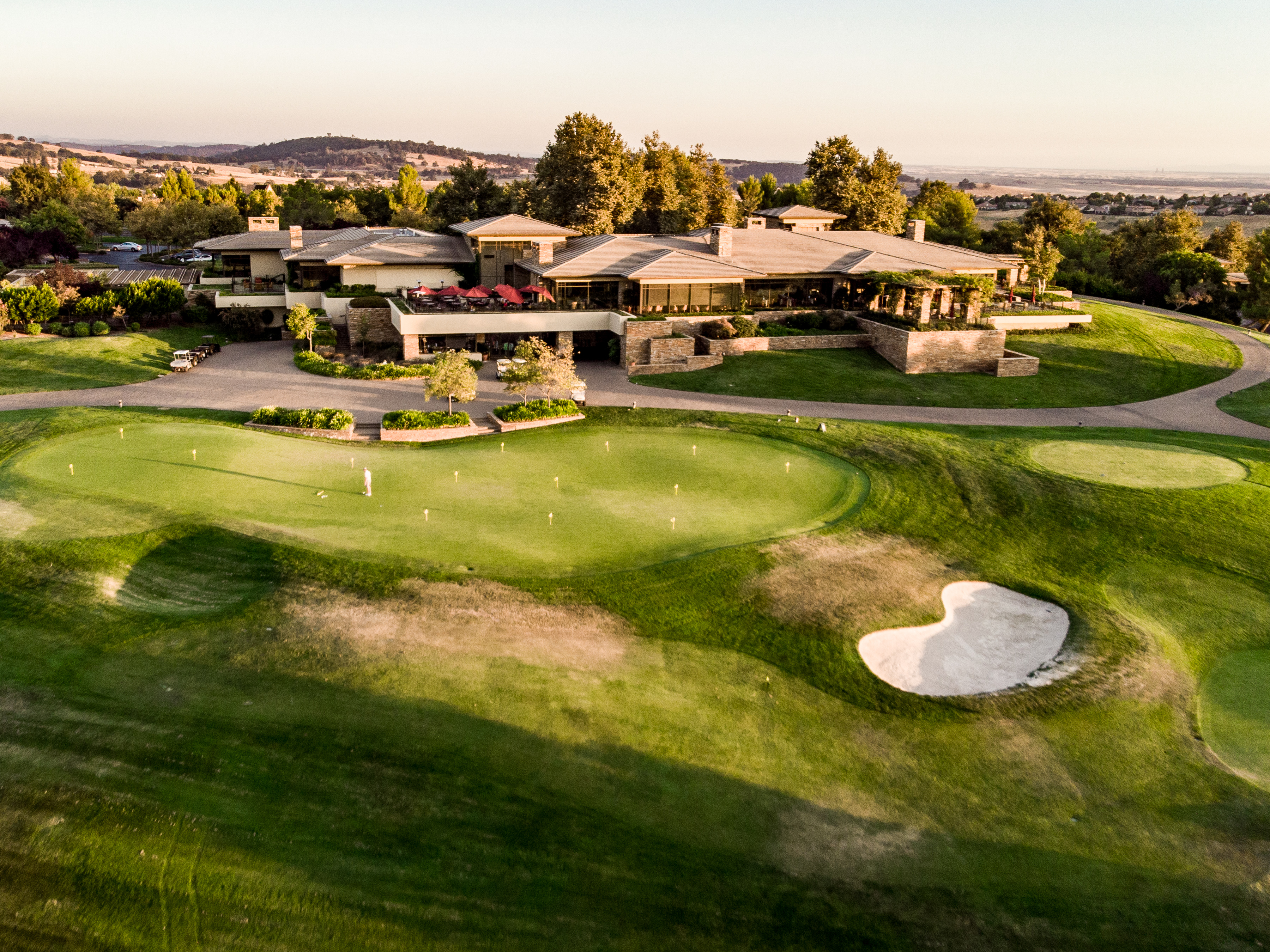
The average El Dorado Hills home sold for 94.8% of its original list price over the past six months. On a $1.1 million home, that's a $57,200 gap between what sellers asked and what the market gave them.
That gap isn't random. It's the cost of pricing above your demand band — and it's one of the most common mistakes we see sellers make in this market.
We track every listing, pending sale, and closed transaction in El Dorado Hills monthly, and have since January 2019. The data is clear: homes priced within their demand band sell faster, closer to asking, and with less stress. Homes priced above it sit, accumulate days on market, and eventually sell for less than they would have with the right price from the start.
Here's what the February 2026 data tells us about how that plays out — and what it means if you're thinking about selling.
See where your home falls in today's demand bands — request a pricing analysis.
What Is a Demand Band — and Why Does It Matter More Than "Comps"?
A demand band is the price range where active buyer interest concentrates for a specific type of home in a specific area. It's not a single number — it's a range defined by how many buyers are actually looking, making offers, and closing in that bracket.
Traditional pricing starts with comparable sales and works backward. That tells you what happened. Demand bands tell you what's happening right now — where buyers are engaging, where they're walking away, and where the tipping points sit.
Think of it this way: your home doesn't compete against every listing in El Dorado Hills. It competes against the 10 or 15 homes in its demand band. Understanding that band — its depth, its velocity, its upper and lower edges — is the difference between a pricing strategy and a guess.
The February 2026 Numbers: Where Demand Is Real and Where It Isn't
As of February 8, 2026, El Dorado Hills has 127 active listings and 40 pending sales — a 31% pending ratio across the full market. But that top-level number hides a dramatic split by price range.
Under $1.25 million, the market is competitive. The $750K–$1M range has 2.3 months of supply, a 42% pending ratio, and homes are selling at 98.6% of list price. The $1M–$1.25M range is even tighter at 1.3 months of supply — the lowest in the entire market.
Between $1.25M and $2M, things slow down noticeably. The $1.25M–$1.5M range has 4.0 months of supply and a 41% pending ratio. Move up to $1.5M–$1.75M and supply jumps to 3.9 months with only a 9% pending ratio. At $1.75M–$2M, there are zero pending sales against 3 active listings.
Above $2 million, it's a different market entirely. The $2M–$5M segment has 8.5 months of supply, an 11% pending ratio, and homes are selling at 96.6% of list. Average active days on market sit at 78 days.
That's the demand map. And if you price your home in a band where buyers aren't actively engaging, days on market start piling up — and that costs you real money.
The Math Behind the $25K Mistake
Here's what the pricing analysis data shows across El Dorado Hills neighborhoods.
In El Dorado Hills overall, the average home originally listed at $1,161,883. The average final list price — after price reductions — was $1,124,982. The average sold price was $1,097,200. That's a 5.2% reduction from original list to close, which on this average is roughly $64,600 left behind.
In Serrano, the original list averaged $1,421,441 and the sold price averaged $1,358,104 — a 4.5% gap, or about $63,300.
In Blackstone, the pattern is sharper. Original list prices averaged $1,014,462 but homes closed at $948,441 — a 5.9% gap. On a million-dollar home, that's $59,000.
In Heritage, sold prices came in at 95.4% of original list. The gap is smaller in dollar terms because the price point is lower — but on a $744K average original list, that's still $33,300.
These aren't theoretical losses. They're the measurable cost of overpricing, built into six months of closed transaction data.
Why Overpriced Homes Don't Just "Sit" — They Sell for Less
There's a common belief that you can always reduce the price later if a home doesn't sell. The data doesn't support this.
When a home enters the market above its demand band, it gets attention from the wrong audience — buyers shopping one bracket up who expect more — and gets ignored by the buyers who would actually compete for it. The first two weeks of a listing generate the most showing activity, the most buyer engagement, and the highest probability of multiple offers.
Once that window closes, a price reduction doesn't reset the clock. Buyers who already saw the listing and passed on it rarely come back. New buyers see the cumulative days on market and treat it as a negotiating chip. The longer a home sits, the wider the gap between what it could have sold for and what it eventually does sell for.
Look at the cumulative days on market data from the broader El Dorado Hills market. In January 2026, average CDOM spiked to 124 days — meaning many homes on the market right now have been listed, reduced, relisted, and reduced again. That time on market isn't free. It costs mortgage payments, carrying costs, and — critically — it costs leverage.
How We Approach Pricing Differently
When we advise a seller, we don't start with comps and add a wishful-thinking premium. We start with the demand band.
Using our Smart Seller Pricing System™, we identify the specific price range where buyer activity is concentrated for your home's profile, neighborhood, and condition. We look at the pending ratio in that band (how many homes went under contract versus how many are sitting), the months of supply (how long current inventory would last at the current pace of sales), and the sold-to-list ratio (how close buyers are paying to asking).
For example, if you own a home in Serrano in the $750K–$1M range, you're in a band with a 50% pending ratio and 1.9 months of supply — sellers have leverage. But if you're in the $1.5M–$1.75M range in Serrano, you're looking at zero pending sales and 5.7 months of supply. Same neighborhood, dramatically different market realities.
Pricing isn't about what your home is "worth." It's about positioning your home in the demand band where the highest number of qualified, motivated buyers are actively competing. That's where the best outcomes happen — faster sales, stronger offers, and more leverage in negotiations.
The Takeaway
Overpricing doesn't protect your equity — it erodes it. The data across every El Dorado Hills neighborhood shows the same pattern: homes that start above their demand band sell for less, take longer to close, and put sellers in a weaker negotiating position.
The $25K mistake isn't dramatic. It's quiet. It shows up as a price reduction in week four, a second reduction in week eight, and a closed sale $50K–$60K below the original ask — money a smarter pricing strategy would have kept in the seller's pocket from day one.
Curious what your home's true demand band looks like? Request a pricing analysis and we'll show you exactly where buyer activity is concentrating for your home — backed by the same data we track every month.
Data source: AreaPro Market Reports as of February 8, 2026. Current metrics (active, pending, months of supply) are point-in-time. Performance metrics (sold price, DOM, sold-to-list ratios) represent the trailing 6-month period (August 2025 – February 2026). Analysis by Shannon Yoffie, Yoffie Real Estate Group.
Related: El Dorado Hills Market Report | El Dorado Hills Home Prices in 2026 | El Dorado Hills Housing Affordability

Shannon and Jon Yoffie
Co-Founders | Yoffie Real Estate Group | Keller Williams
or another way