

Categories
AdvisoryCalifornia's Home Insurance Crisis Has Reached El Dorado Hills. Here's What the Data Actually Shows.
By Jon Yoffie | February 22, 2026 | Policy & Market Context
A homeowner in Agoura Hills — wildfire territory northwest of Los Angeles — recently received an insurance bill from State Farm for more than $44,000 a year. The only other insurer willing to cover their home quoted $80,000. That's a real number, reported by the Wall Street Journal last week, and it's not an outlier anymore. It's where California's home insurance market is heading for properties in fire-adjacent communities — which, if you live in the El Dorado Hills foothills, includes you.
We're not here to scare anyone. El Dorado Hills is not the Pacific Palisades. The risk profiles are different, the fire history is different, and the insurance situation — while genuinely difficult — looks different from what's unfolding in LA County. But the statewide forces driving this crisis don't stop at the county line, and if you own a home in EDH, Serrano, or anywhere in the foothills, this deserves your attention now — not when your renewal notice arrives.
Thinking about selling in the next 12–18 months? Insurance costs now affect how buyers qualify — and what they'll offer. Get a data-backed pricing analysis that accounts for what's actually moving the market right now.
What's Happening Statewide — The Numbers Behind the Headlines
The California FAIR Plan — the state-chartered insurer of last resort for homeowners who can't get coverage elsewhere — had roughly 210,000 policies in force in 2020. By December 2025, that number had climbed to 668,609. That's a 146% increase in just over three years, driven almost entirely by private insurers pulling back from fire-exposed ZIP codes across the state.
The FAIR Plan is now seeking a 35.8% rate increase — what would be its largest hike in at least seven years — to shore up finances strained by the January 2025 LA wildfires, which cost insurers more than $40 billion in claims. The state's biggest home insurer, State Farm, received emergency rate approvals just to stay solvent. Two of California's largest carriers, State Farm and Allstate, have stopped selling new policies statewide. Farmers pledged to add 5,596 policies in high-risk areas by 2028 — but that's less than a tenth of the policies it dropped in the previous two years.
Meanwhile, surplus lines insurance — the market for homes that private carriers won't touch — saw new business surge from roughly 50,000 policies in 2023 to 320,000 in 2025. Those policies carry fewer consumer protections and generally higher premiums. The California Association of Realtors surveyed agents last year: nearly one in five reported a canceled sale because the buyer couldn't find affordable insurance.
El Dorado Hills Is Not LA — But the Foothills Aren't Exempt
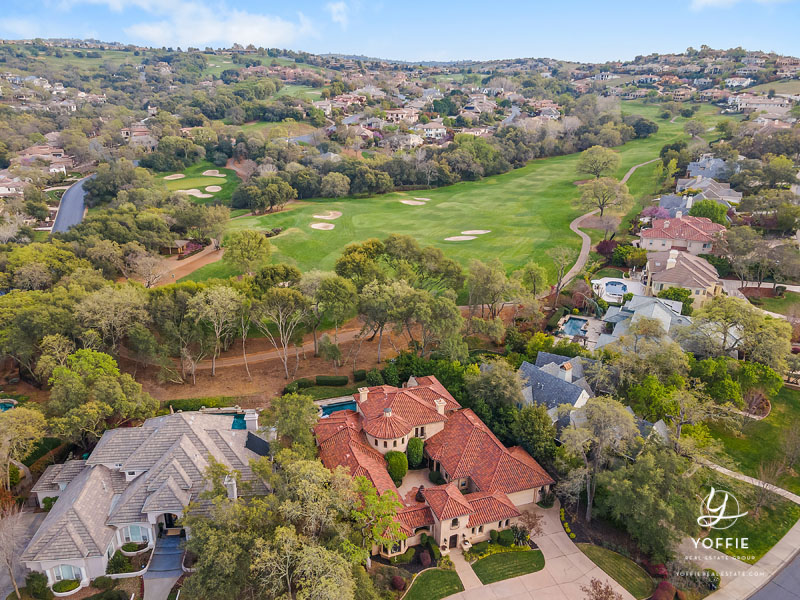
Here's where we have to be straight with you. The El Dorado Hills area carries genuine wildfire exposure. Parts of the community are mapped in High and Very High Fire Hazard Severity Zones by Cal Fire — particularly hillside areas with significant vegetation and east-facing slopes. Serrano's gated interior is different from a ridgeline lot above Bass Lake Road. The risk isn't uniform, and that matters enormously for insurance pricing.
What EDH has working in its favor: a stronger infrastructure of community fire mitigation, better access for emergency response, and proximity to well-staffed Cal Fire resources compared to remote mountain communities. Two formal designations also put this area in a materially different position than most California communities facing the same insurance pressure.
First: El Dorado County earned designation as a Fire Risk Reduction Community from the California Board of Forestry in July 2024 — one of only seven counties in the state. That designation reflects fire planning practices that exceed minimum state requirements for defensible space. According to a local insurance broker at the time of the designation, homeowners on the FAIR Plan can qualify for approximately a 9.5% discount as a result, with private carriers varying.
Second, and specific to Serrano: the Serrano Owners' Association and Serrano Fire Safe Council have earned Firewise USA® recognition across all three community zones — SerranoWest (Villages A, B, D1, D2), SerranoNorth (all staffed gated villages plus J6 and J7), and SerranoSouth (Villages C, E, F, G&J4, K3/K4). 2025 certificates are live at serranofiresafecouncil.org. The program means community-funded vegetation reduction along parkways, private streets, and open space — so individual homeowners benefit from collective action, not just their own mitigation work. Many insurers recognize Firewise USA® designation directly as a discount trigger.
What EDH doesn't have working in its favor: the statewide forces driving up premiums apply here too. When insurers reassess their California exposure, they use property-level risk models — not county-level averages. Block-by-block scoring is becoming standard. Two homes on the same street can receive very different quotes based on roof age, defensible space clearance, and proximity to vegetation. That's not a warning — it's just how the math now works.
"Nearly one in five California real estate agents reported a canceled sale last year because a buyer couldn't find affordable insurance." — California Association of Realtors survey, 2025
Why This Is Now a Real Estate Issue, Not Just an Insurance Issue
The Realtor survey statistic above is the one worth sitting with. Canceled sales don't just hurt sellers — they compress demand in specific price bands and specific neighborhoods. When buyers can't get a lender to accept the available insurance options, those homes effectively leave the market. Over time, that affects pricing.
We're starting to counsel sellers on this directly: insurability is becoming part of the pricing conversation. A home that a buyer will struggle to insure — regardless of how well it shows, how well it's priced, or how desirable the neighborhood — faces a shrinking buyer pool. The FAIR Plan covers fire only. It doesn't cover liability, water damage, or theft. Lenders may require a supplemental "wrap" policy, which adds cost and complexity. Some buyers, when confronted with that math, walk.
This isn't hypothetical. We're seeing it play out in transactions across the Sacramento foothills. A home in a desirable Serrano cul-de-sac with a complicated insurance profile is not the same negotiating position as a comparable home in the EDH flats with a standard admitted carrier quote. Buyers — especially those relocating from the Bay Area who are already stretching on purchase price — are doing that math.
What You Can Actually Do — The Mitigation Checklist That Matters
California's new Safer from Wildfires framework — part of Insurance Commissioner Ricardo Lara's Sustainable Insurance Strategy — requires insurers to offer discounts when homeowners take documented mitigation steps. This is meaningful. Insurers who use the newly approved wildfire catastrophe models are also mandated to write more policies in wildfire-distressed areas, which is the first time in this crisis that there's been a real mechanism to pull people back from the FAIR Plan.
The mitigation actions that matter most for insurance underwriting right now:
- Roof: A Class A roofing system installed after 2018 is a significant underwriting factor. Document the installation with receipts and permits.
- Ember-resistant vents: One of the leading causes of structure loss in wildfires. Replacing standard vents with ember-resistant versions is a documented discount trigger.
- Defensible space: Zone 1 (0–30 feet) and Zone 2 (30–100 feet) clearances — maintained and photographed annually. Some insurers want evidence of compliance beyond the legal minimum.
- Deck and exterior materials: Non-combustible or ignition-resistant materials on decks, eaves, and siding are increasingly weighted in risk models.
- Documentation: Build what insurance professionals are calling an "insurability dossier" — receipts, photos, permits, inspection records. Carriers and brokers can present your property more favorably when the evidence is organized.
If you live in Serrano, there's an additional layer worth knowing: download your community's Firewise USA® certificate from serranofiresafecouncil.org and provide it directly to your insurance carrier or broker. Some insurers update their records only twice a year through the NFPA — proactively submitting the certificate ensures the discount doesn't get missed at renewal.
If you're planning to sell in the next 12–24 months, all of this documentation — personal mitigation records plus your community's Firewise certification — is a marketing asset at time of offer. A seller who can hand a buyer a complete insurability package is in a materially different position than one who can't.
Where the Market Goes From Here
Commissioner Lara is candid about the timeline: "Just as it's taken us years to get here, it's going to take us years to get us out." Mercury Insurance, Allstate, and CSAA have signaled they plan to file for expanded coverage under the new catastrophe modeling rules — which is the first real movement from the private market in years. But the targets are modest and the timelines are long.
McKinsey estimates California's private insurance coverage gap for wildfire exposure alone sits between $800 billion and $1.3 trillion. That's not a problem that resolves in one legislative cycle. For El Dorado Hills homeowners, the practical reality is this: the insurance market will remain turbulent for the foreseeable future, the cost of coverage will continue to rise for high-risk properties, and the gap between an insurable home and a difficult-to-insure home will increasingly show up in offer prices.
We'll keep tracking this closely. The new catastrophe models, the rate filings, and what the private carriers actually do — as opposed to what they say — will tell us a lot about the next 18 months. We'll update this analysis as the data develops.
Thinking About Selling?
Insurance costs now affect buyer qualification — and your negotiating position. See where your home falls in today's demand bands before you list.
Request a Smart Pricing AnalysisSources: Wall Street Journal (Feb. 2026) | California FAIR Plan Association operational data | The Surplus Line Association of California annual report (2025) | McKinsey & Company, "Forging a Resilient Future for California's Homeowners and Insurers" (Oct. 2025) | California Department of Insurance press releases | California Association of Realtors 2025 agent survey. Market data reflects conditions as of February 2026. Individual insurance outcomes vary by property, location, and carrier.
